N-Methyl Aniline (NMA) is one of the most efficient octane boosters per unit volume. Because it is ashless and metal-free, refiners and blenders use it to lift the octane number of base gasoline at a low treat rate. PETRONAX supplies N-Methyl Aniline as the INTRON® Octane Booster Series to customers worldwide.
What is N-Methyl Aniline?
N-Methyl Aniline, also called NMA, monomethylaniline (MMA) or N-methylaminobenzene, is a secondary aromatic amine. Structurally, it is aniline with one methyl group on the nitrogen atom. This small change makes the molecule both a strong fuel octane improver and a useful chemical intermediate.
Today, its largest use worldwide is as a non-metallic octane booster for motor gasoline. Besides fuels, it also serves as an intermediate for dyes, agrochemicals, pharmaceuticals and rubber chemicals. You can find independent substance data in PubChem.
N-Methyl Aniline properties
| Parameter | Typical value |
|---|---|
| Chemical name | N-Methyl Aniline |
| Synonyms | NMA, MMA, monomethylaniline, N-methylaminobenzene |
| CAS number | 100-61-8 |
| Molecular formula / weight | C₇H₉N / 107.15 g/mol |
| Appearance | Clear liquid, colourless to light yellow; darkens in air |
| Boiling point | ≈ 196–197 °C |
| Melting point | ≈ −57 °C |
| Density at 20 °C | ≈ 0.986–0.989 g/cm³ |
| Flash point | ≈ 79–80 °C (closed cup) |
| Solubility | Poorly soluble in water; miscible with alcohols, ethers and most organic solvents |
Indicative values. The PETRONAX Certificate of Analysis states the batch-specific data.
How it works as an octane booster
In simple terms, knock occurs when the unburned fuel-air mixture ignites on its own before the flame front reaches it. Just before that self-ignition, hydrocarbons break down in a chain of radical reactions.
NMA, however, interrupts these chains. As a result, it delays self-ignition, and the spark-ignited flame burns the charge in a controlled way. Consequently, the engine can run at higher compression without knock. In practice, labs measure the effect as the Research Octane Number (RON) with the engine method ASTM D2699.
Why refiners choose N-Methyl Aniline
- High octane gain per litre. Above all, NMA lifts octane strongly at a low dose. Thus, you need less additive, tank space and freight per octane point.
- Ashless and metal-free. Unlike lead, manganese or iron antiknock agents, it therefore leaves no metal residue in the engine.
- Safe for catalysts. Because there is no metal, spark plugs, catalytic converters and oxygen sensors stay clean.
- Flexible blending. Moreover, it mixes with standard gasoline streams and works alongside oxygenates and other additives.
- Lower cost per point. As a result, for many refiners NMA is cheaper than deeper reforming or isomerisation.
- Easy dosing. Likewise, standard pumps or additive dosing units handle it, batch-wise or continuously.
Laboratory test results
In our laboratory, we dosed NMA into a reference mixture of isooctane and n-heptane (70:30). Meanwhile, we measured the Motor Octane Number (MON) for each dose:
| Dose, % by weight | MON | Increase |
|---|---|---|
| 0 (reference) | 70.0 | – |
| 1.05 | 71.6 | +1.6 |
| 1.5 | 72.0 | +2.0 |
| 1.8 | 72.4 | +2.4 |
However, the gain in commercial gasoline depends on the base fuel. Therefore, we confirm the treat rate with a test of your gasoline.
NMA vs other octane boosters
In general, refiners have several ways to reach the octane spec. However, each route has its own trade-offs:
| Octane booster type | Examples | Main consideration |
|---|---|---|
| Aromatic amines | N-Methyl Aniline | High efficiency at a low treat rate; regulatory status varies by market |
| Oxygenates | Ethanol, MTBE, ETBE | Large volumes needed; affect vapour pressure and energy content |
| Aromatic hydrocarbons | Toluene, xylenes | Large volumes needed; aromatics content is limited in many fuel specs |
| Metal-based antiknock agents | Lead, manganese and iron compounds | Metal deposits; restricted or banned in many markets |
| Refinery processes | Reforming, isomerisation, alkylation | Very high capital and operating cost |
Quality and compliance
Of course, the octane performance of N-Methyl Aniline depends on purity. For this reason, we control residual aniline, dimethylaniline, water content and colour in every batch. In addition, each shipment comes with a Certificate of Analysis, a Safety Data Sheet and the transport documents for the destination market.
Check local rules. The permitted NMA content in gasoline differs by market, and some countries restrict it. So check national fuel rules and the ECHA substance data before blending. We gladly support you with documents; however, the blender or importer remains responsible for local compliance.
Storage and safety
First of all, store the product in tightly closed containers in a cool, dry and well-ventilated area, away from heat and light. Also, keep it apart from strong oxidisers, strong acids and food.
Note that N-Methyl Aniline is toxic. In particular, it is harmful by inhalation, ingestion and skin contact, and it is hazardous to aquatic life. Therefore, wear chemical-resistant gloves, eye protection and protective clothing, and use local exhaust ventilation. For reference, the NIOSH Pocket Guide lists exposure limits. Finally, always read the current Safety Data Sheet before handling.
Buy N-Methyl Aniline from PETRONAX
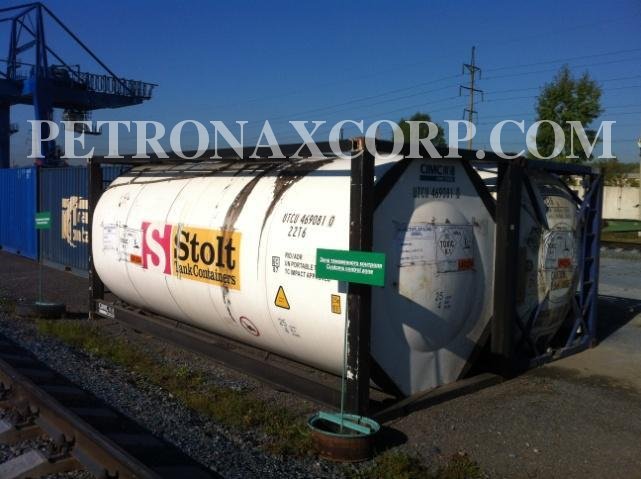
First, test a sample in your lab. After that, scale up to regular supply. Furthermore, we ship it to North and Latin America, Europe, the Middle East, Africa and Asia. Similarly, for mid-size volumes we supply steel drums and 1,000 L IBC containers. Finally, for larger volumes, we ship in ISO tank containers, road tankers or rail tank cars. To get an offer, request a quote or write to sales@petronaxcorp.com.
FAQ: N-Methyl Aniline as an octane booster
What is N-Methyl Aniline?
N-Methyl Aniline (NMA, CAS 100-61-8) is a secondary aromatic amine. In fuels, it serves as an ashless octane booster for motor gasoline.
How does NMA raise the octane number?
Put simply, it slows the radical chain reactions that lead to self-ignition. As a result, it delays knock and raises the octane number of the gasoline.
How much NMA is added to gasoline?
As a rule, we recommend no more than 1.3 % by weight. However, the octane gain depends on the base fuel, so we confirm the dose with a test of your gasoline.
Is N-Methyl Aniline allowed in gasoline everywhere?
No. Unfortunately, the permitted NMA content differs by market, and some countries restrict it. Therefore, blenders must check local fuel rules before use.
Is NMA hazardous?
Yes. Indeed, it is toxic and hazardous to aquatic life. Consequently, handle it with protective equipment and follow the Safety Data Sheet.
Related resources
- Octane boosters and octane improvers – overview of the full INTRON® range
- INTRON® Octane Booster Series – our NMA product page
- N-Methyl Aniline guide – six industrial uses of NMA
- Why NMA is an efficient RON improver – test data and benefits
- N-Methyl Aniline octane additive – properties and mechanism