A metal-free octane booster for gasoline
The INTRON® octane booster series is based on N-Methyl Aniline (NMA), an ashless aromatic amine. Thanks to its high efficiency, refiners and blenders raise the octane number of base gasoline at a low treat rate. Moreover, they reach the octane spec without changing the refinery setup.
How an octane booster works
In simple terms, knock happens when the fuel-air mix ignites on its own before the spark. As a result, the engine loses power, and over time pistons and valves can suffer damage.
In other words, an octane booster raises the resistance of gasoline to this self-ignition. Consequently, the engine can run at higher compression and better efficiency. In practice, labs measure the effect as the Research Octane Number (RON) with the engine test method ASTM D2699.
Among the options, aromatic amines such as N-Methyl Aniline are among the most efficient octane improvers per unit volume. For this reason, NMA is the active chemistry of the INTRON® octane booster series. Furthermore, independent substance data for NMA (CAS 100-61-8) are available in PubChem.
Key benefits of the INTRON® octane booster series
In short, our octane booster gives you octane where you need it, at a low cost per point.
High octane gain
N-Methyl Aniline lifts RON strongly per litre. Thus, you need less additive, less tank space and less freight per octane point.
Ashless and metal-free
Unlike lead, manganese or iron antiknock agents, it therefore leaves no metal residue in the engine.
Kind to catalysts
Because there is no metal, spark plugs, catalytic converters and oxygen sensors stay clean.
Flexible blending
Firstly, it mixes with standard gasoline streams. In addition, it works with oxygenates and bioethanol-based fuels.
Lower cost per point
As a result, for many refiners this octane booster is cheaper than deeper reforming or isomerisation.
Simple dosing
Likewise, standard pumps or additive dosing units handle it, either batch-wise or continuously.
Consistent quality
Before release, every batch is tested. Moreover, each delivery comes with a Certificate of Analysis.
Technical support
Besides supply, our team helps with blend design, compatibility tests and regional rules.
N-Methyl Aniline vs other octane improvers
In general, refiners have several ways to reach the octane spec. However, each route has its own trade-offs, as the table shows.
| Octane improver type | Examples | Main consideration |
|---|---|---|
| Aromatic amines | N-Methyl Aniline (INTRON® octane booster series) | High efficiency at a low treat rate; regulatory status varies by market |
| Oxygenates | Ethanol, MTBE, ETBE | Large volumes needed; affect vapour pressure and energy content |
| Metal-based antiknock agents | Lead, manganese and iron compounds | Metal deposits; restricted or banned in many markets |
| Refinery processes | Reforming, isomerisation, alkylation | Very high capital and operating cost |
Octane booster dosage and blending
As a rule, we recommend a treat rate of no more than 1.3 % by weight. However, within this range the octane gain depends on the base gasoline and its other properties. Therefore, our specialists set the best dose after a review of your fuel data.
In addition, you can add the product as a concentrate or as a solution in base fuel. For example, use standard pumps in the liquid stream, mixing units at refineries and depots, or special additive dosing equipment.
Compliance first. The permitted N-Methyl Aniline content in gasoline differs by market, and some countries restrict it. For that reason, check national fuel rules and the ECHA substance data before blending. We gladly support you with documents; however, the blender or importer remains responsible for local compliance.
Technical data of the octane booster
| Property | Typical value |
|---|---|
| Active component | N-Methyl Aniline (CAS 100-61-8), C₇H₉N |
| Appearance | Clear liquid, colourless to light yellow; darkens in air |
| Density at 20 °C | ≈ 0.986–0.989 g/cm³ |
| Boiling point | ≈ 196–197 °C |
| Melting point | ≈ −57 °C |
| Flash point | ≈ 79–80 °C (closed cup) |
| Solubility | Poorly soluble in water; miscible with alcohols, ethers and most organic solvents |
| Recommended dose | ≤ 1.3 % by weight |
Typical values only, not a specification. Batch-specific data are stated on the Certificate of Analysis. For full data, request the technical data sheet.
Storage, handling and safety
To begin with, keep the octane booster in tightly closed containers in a cool, dry and well-ventilated place. Above all, protect it from light: open containers, the additive and finished fuels that contain it should not be exposed to light, since NMA darkens in air. Under these conditions, the shelf life is 12 months from production.
Note that N-Methyl Aniline is a toxic substance. In particular, it is harmful by inhalation, ingestion and skin contact, and it is hazardous to aquatic life. Hence, always wear chemical-resistant gloves, eye protection and protective clothing, and use a mask or local exhaust where needed. Finally, before handling, read the current Safety Data Sheet in full.
How to order the octane booster
First, test a sample in your lab. After that, scale up to regular supply. Furthermore, we ship to customers in Europe, the Americas, the Middle East, Africa and Asia.
Lab sample
This way, you check the octane gain in your own base gasoline before you commit to a volume.
Request a sampleDrums and IBCs
For mid-size volumes, steel drums and 1,000 L IBC containers suit blenders, depots and smaller terminals.
Ask for a priceISO tanks and bulk
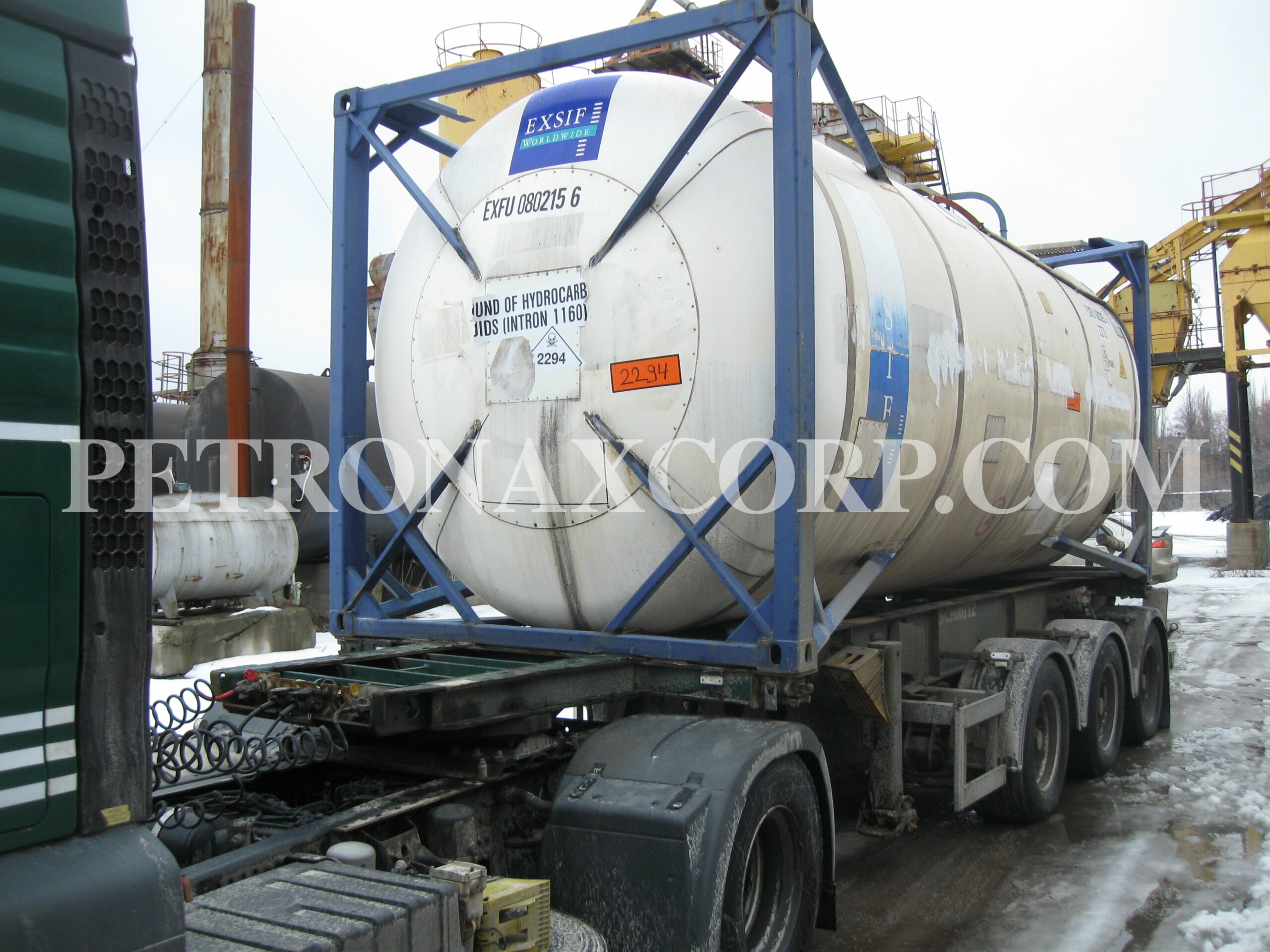
For larger volumes, we ship in ISO tank containers, road tankers or rail tank cars.
Request a quoteIn every case, each shipment comes with a Certificate of Analysis, a Safety Data Sheet and the transport documents for the destination market.
FAQ: octane booster and N-Methyl Aniline
What is an octane booster?
Simply put, an octane booster is a fuel additive that raises the octane number of gasoline. As a result, the fuel resists knock better, so engines can run at higher compression.
Is N-Methyl Aniline a good octane improver?
Yes. In fact, N-Methyl Aniline is one of the most efficient octane improvers per unit volume. In addition, it is ashless and leaves no metal deposits in the engine.
How much octane booster do I need?
We recommend no more than 1.3 % by weight. However, the octane gain depends on the base gasoline, so we confirm the treat rate with a lab test of your fuel.
Can I use an NMA octane booster in every market?
No. Unfortunately, the permitted N-Methyl Aniline content in gasoline differs by country, and some markets restrict it. Therefore, always check the local fuel rules before blending.
How should I store the octane booster?
Above all, keep it in closed containers in a cool, ventilated place away from light. Under these conditions, the shelf life is 12 months from production.
Related products and resources
Talk to PETRONAX about your octane booster needs
First, send us your base gasoline data, target octane and volumes. Then we reply with dosing advice and an offer.
PETRONAX Europe GmbH
O4, 4 · 68161 Mannheim · Germany
Tel. +49 621 405 458 01
Amtsgericht Mannheim, HRB 748705
PETRONAX Americas LLC
Austin, Texas · USA
Tel. +1 737 201 28 77