by Petronax Petronax 2 Comments

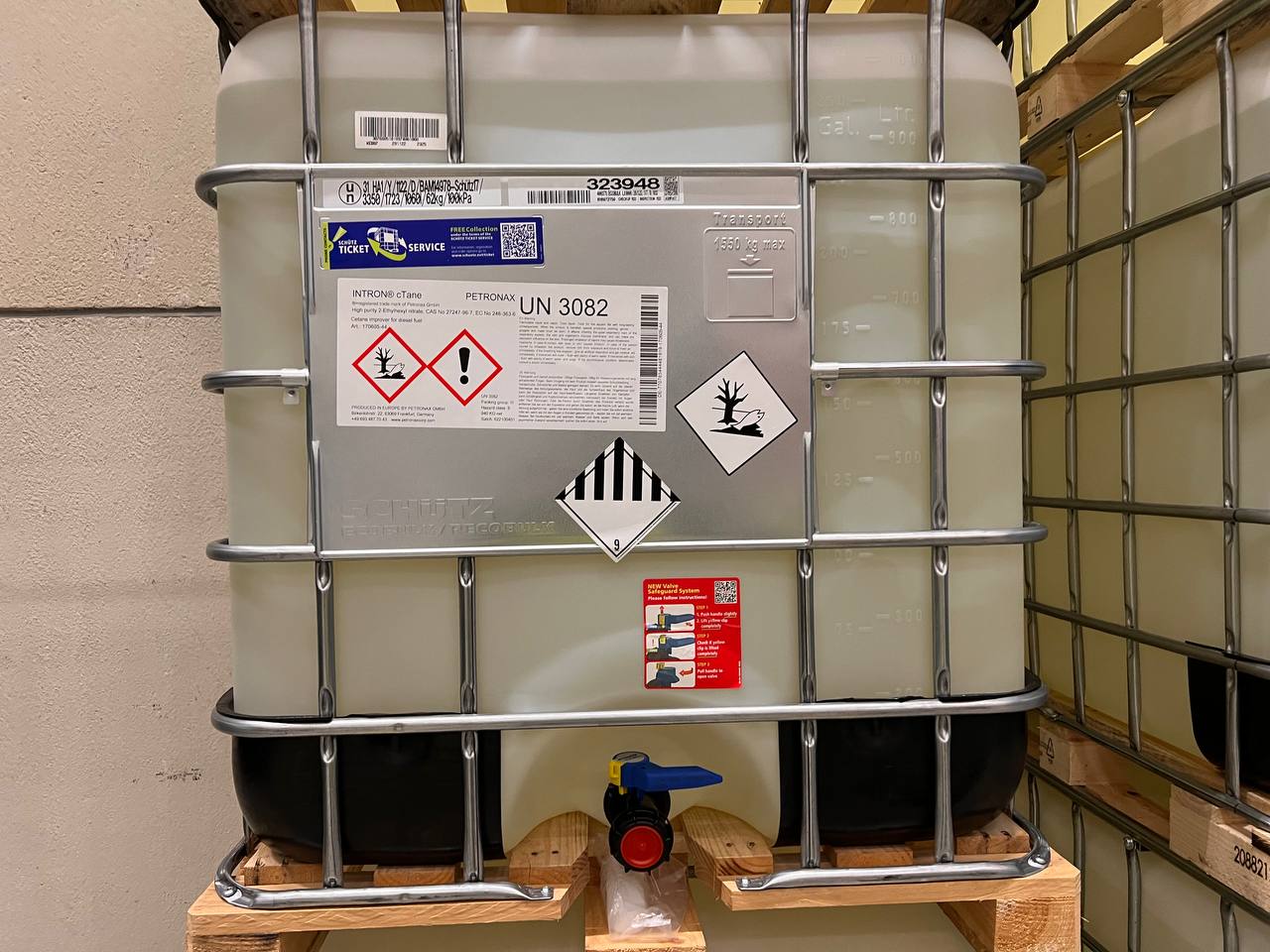
Cetane improver 2 Ethylhexyl nitrate INTRON cTane 2EHN

INTRON cTane – cetane improver 2 Ethylhexyl nitrate 2EHN

Diesel fuel is an important source of energy for transportation and industrial applications. It is a fuel that is widely used around the world, especially in heavy-duty vehicles such as trucks, buses, and trains. The quality of diesel fuel is determined by a number of factors, including its cetane number. The cetane number is a measure of how easily a fuel ignites in a diesel engine. Fuels with higher cetane numbers have shorter ignition delays and therefore provide better combustion, which results in improved engine performance and lower emissions.

One way to increase the cetane number of diesel fuel is through the use of cetane improvers. Cetane improvers are chemical additives that are added to diesel fuel to increase its cetane number. They work by reducing the ignition delay of the fuel, which leads to better combustion and improved engine performance. In this article, we will discuss the use of cetane improvers in diesel fuel production and their economic and production efficiency.

Types of Cetane Improvers There are several types of cetane improvers that are used in diesel fuel production. The most common type is alkyl nitrates, such as isopropyl nitrate and 2-ethylhexyl nitrate. These additives are typically used in concentrations of 0.1 to 0.5% by volume. Other types of cetane improvers include peroxyesters, peroxides, and amino compounds.

Advantages of Cetane Improvers The use of cetane improvers in diesel fuel production has several advantages. First, they can improve the combustion efficiency of diesel engines. This leads to improved fuel economy and lower emissions. Second, cetane improvers can help reduce engine noise, which is especially important for heavy-duty vehicles that operate in urban areas. Finally, cetane improvers can improve the cold-starting performance of diesel engines, which is critical in colder climates.

Economic Efficiency of Cetane Improvers The use of cetane improvers in diesel fuel production can also have economic benefits. One of the main economic benefits is improved fuel economy. Improved fuel economy means that less fuel is consumed to travel a given distance, which can lead to cost savings for consumers and businesses. In addition, improved fuel economy can lead to lower emissions, which can result in reduced regulatory compliance costs.

Another economic benefit of cetane improvers is reduced engine maintenance costs. Diesel engines that run on fuels with higher cetane numbers tend to produce less soot and other combustion byproducts, which can reduce engine wear and tear. This can lead to longer engine life and lower maintenance costs over the lifetime of the engine.

Production Efficiency of Cetane Improvers The use of cetane improvers can also improve the production efficiency of diesel fuel. One way that cetane improvers can improve production efficiency is by reducing the need for other additives. For example, some diesel fuels require the use of lubricity additives to protect the engine from wear and tear. By improving the combustion efficiency of the fuel, cetane improvers can reduce the need for lubricity additives, which can simplify the production process and reduce costs.

Cetane improvers can also improve the stability of diesel fuel during storage and transportation. Diesel fuel is prone to degradation over time, which can lead to the formation of sediments and other contaminants. Cetane improvers can help prevent this degradation by improving the stability of the fuel. This can lead to longer shelf life and reduced waste.

Conclusion In conclusion, the use of cetane improvers in diesel fuel production has several economic and production efficiency benefits. These benefits include improved fuel economy, reduced engine maintenance costs, and improved fuel stability. While cetane improvers do add to the cost of diesel fuel production, the economic and production efficiency benefits can outweigh these

 

by Petronax Petronax 21 Comments

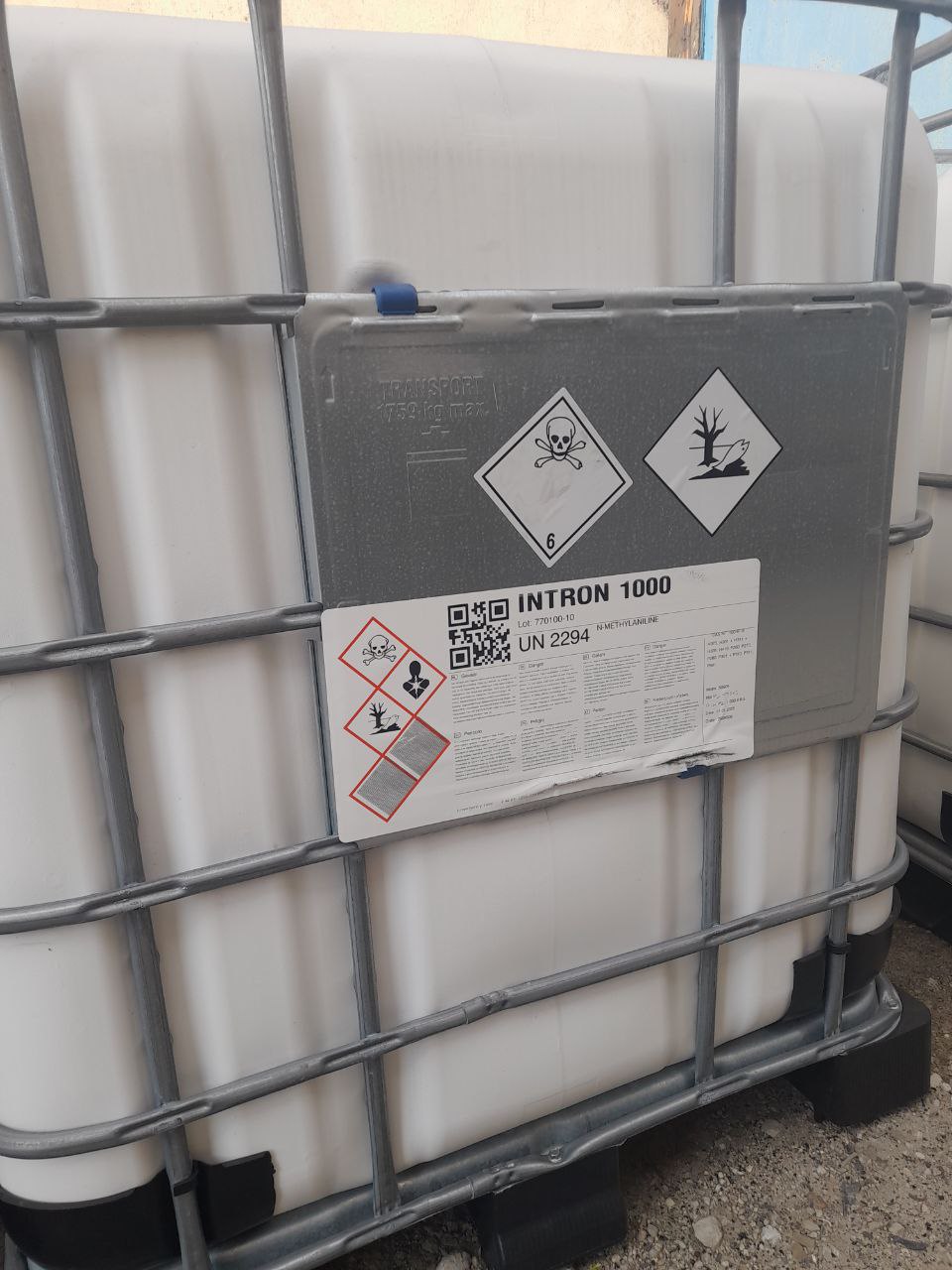
INTRON 1000: Octane Additive that Enhances Gasoline Performance

The gasoline we use in our cars is a complex mixture of various hydrocarbons, additives, and contaminants. The precise composition of gasoline can vary depending on the crude oil source, refining process, and environmental regulations. However, one of the most important factors that determine the quality and performance of gasoline is its octane rating.

Octane rating is a measure of a fuel’s ability to resist “knocking,” which is an undesirable combustion phenomenon that occurs when the air-fuel mixture in an engine cylinder detonates prematurely. Engine knock can cause damage to the engine and reduce its performance and fuel efficiency. The higher the octane rating of gasoline, the better it can resist engine knock and provide a smoother and more efficient driving experience.

To increase the octane rating of gasoline, various octane booster additives can be used. One such additive is INTRON 1000, a colorless, clear liquid that is widely used in the gasoline refining process. In this article, we will explore the properties, benefits, and applications of INTRON 1000 as an octane booster additive.

Properties of INTRON 1000

INTRON 1000 is a colorless to light yellow liquid with a characteristic amine odor. It is soluble in water, ethanol, and most organic solvents, and has a boiling point of 197°C. INTRON 1000 is a weak base and can form salts with strong acids, such as hydrochloric acid (HCl).

INTRON 1000 is a versatile chemical that can be used in various applications, such as in the production of dyes, pharmaceuticals, and agrochemicals. However, one of the most important applications of INTRON 1000 is as an octane booster additive in gasoline.

How Does INTRON 1000 Increase Octane Rating?

To understand how INTRON 1000 works as an octane booster, we need to first understand how engine knock occurs. Engine knock is the result of the air-fuel mixture in the engine cylinder detonating prematurely, before the spark plug ignites it. This can happen when the air-fuel mixture is compressed too much or too quickly, causing it to ignite spontaneously.

One way to prevent engine knock is to use gasoline with a higher octane rating. Higher-octane gasoline can resist engine knock better than lower-octane gasoline because it burns more slowly and evenly, allowing for a more controlled combustion process.

However, it is not always possible or practical to produce gasoline with a high octane rating from crude oil alone. This is where octane booster additives like INTRON 1000 come in. INTRON 1000 can increase the octane rating of gasoline by slowing down the combustion process, which reduces the likelihood of engine knock.

Specifically, INTRON 1000 works by delaying the ignition of the air-fuel mixture in the engine cylinder. When gasoline with INTRON 1000 is injected into the engine cylinder, INTRON 1000 molecules are first vaporized and then mixed with the air and fuel. As the air-fuel mixture is compressed, INTRON 1000 molecules absorb heat from the combustion process and undergo a series of chemical reactions, which generate free radicals and other reactive species.

These free radicals and reactive species then react with the hydrocarbon molecules in the air-fuel mixture, causing a chain reaction that eventually leads to combustion. However, because INTRON 1000 molecules are present, they also react with the free radicals and reactive species, slowing down the chain

reaction and delaying the ignition of the air-fuel mixture.

This delayed ignition allows for a more controlled combustion process, which reduces the likelihood of engine knock. In addition, because INTRON 1000 is a weak base, it can react with acidic combustion products and neutralize them, preventing them from reacting with the engine components and causing corrosion.

Benefits of INTRON 1000 as an Octane Booster Additive

INTRON 1000 has several advantages over other octane booster additives, such as tetraethyl lead (TEL) and methyl tertiary butyl ether (MTBE). TEL was a popular octane booster additive in the past but was phased out due to its environmental and health hazards. MTBE was another popular octane booster additive but was also phased out due to its potential to contaminate groundwater.

Compared to TEL and MTBE, INTRON 1000 is a safer and more environmentally friendly octane booster additive. INTRON 1000 does not contain any heavy metals or halogens and does not produce harmful emissions or residues when burned in the engine. Moreover, INTRON 1000 is biodegradable and does not persist in the environment like TEL and MTBE.

In addition to its environmental benefits, INTRON 1000 has several technical advantages as an octane booster additive. INTRON 1000 is a highly efficient octane booster, capable of increasing the octane rating of gasoline by up to 5-7 points. Moreover, INTRON 1000 has a low vapor pressure and does not evaporate easily, which means it can be stored and transported safely without the risk of vapor leakage.

Applications of INTRON 1000 in the Gasoline Industry

INTRON 1000 is widely used in the gasoline industry as an octane booster additive. It can be added to gasoline either in the refinery or at the retail gas station. The optimal concentration of INTRON 1000 in gasoline depends on various factors, such as the initial octane rating of the gasoline, the engine type, and the operating conditions.

In addition to its use as an octane booster, INTRON 1000 can also be used as a corrosion inhibitor in gasoline. INTRON 1000 can react with acidic combustion products, such as sulfur dioxide and nitrogen oxides, and neutralize them, preventing them from corroding the engine components. Moreover, INTRON 1000 can form a protective film on the metal surfaces of the engine, reducing the likelihood of corrosion.

Petronax is a global leader in the production and sale of INTRON 1000 as an octane booster additive. Petronax has been producing and selling INTRON 1000 for over 10 years, serving customers in the United States, Europe, Asia, and other regions.

Petronax INTRON 1000 is produced using state-of-the-art technology and rigorous quality control procedures, ensuring that the product meets the highest standards of purity and performance. Petronax INTRON 1000 is also available in various grades and concentrations, tailored to the specific needs of the customers.

Petronax is committed to sustainability and environmental responsibility. Petronax INTRON 1000 is produced using eco-friendly processes and raw materials, minimizing the environmental footprint of the product. Moreover, Petronax INTRON 1000 is compliant with all relevant environmental and health regulations, ensuring the safety and well-being of the users.

INTRON 1000 is a versatile and efficient octane booster additive that can enhance the performance and quality of gasoline. INTRON 1000 works by delaying the ignition of the air-fuel mixture in the engine cylinder, reducing the likelihood of engine knock and improving the fuel efficiency and driving experience. INTRON 1000 is also a safer and more environmentally friendly alternative to other octane booster additives, such as TEL and MTBE.


by Petronax Petronax No Comments

INTRON® cTane ASTM D613 test

We conducted a test on the cetane improver for diesel fuel INTRON cTane using ASTM D613 test method. The test showed a significant improvement in the cetane number, which increased from 45 to 52, exceeding the ASTM D975 and EN 590 cetane number requirements.

The test was performed on a diesel engine using a blend of diesel fuel and INTRON cTane. The engine’s performance was measured before and after the addition of the cetane improver, and the results showed an improvement in the engine’s performance parameters. The engine had a better cold start, smoother acceleration, and reduced noise and vibration.

The test results also showed that INTRON cTane had a low pour point and a high flash point, indicating that it is stable under different temperature and pressure conditions. The product’s thermal stability was also evident, making it suitable for use in various applications such as transportation, power generation, and marine engines.

Overall, the test showed that INTRON cTane is a highly effective cetane improver for diesel fuel, providing optimal diesel engine performance. The product’s excellent properties make it suitable for use in various applications, ensuring clients receive high-quality chemical additives that enhance their products’ performance

by Petronax Petronax

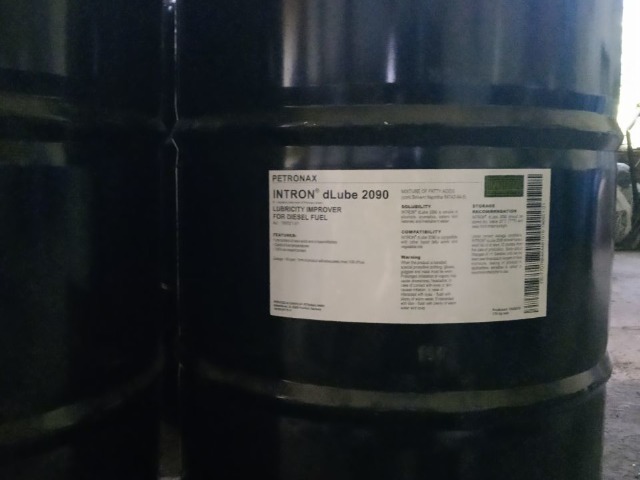
INTRON® dLube – lubricity test for diesel fuel

Lubricity improvers are chemical additives that are used to enhance the lubrication properties of diesel fuel. Diesel fuel is a complex mixture of hydrocarbons that is used as a fuel for diesel engines. It is important for diesel fuel to have good lubrication properties because it helps to reduce wear and tear on the engine components and extend the life of the engine. INTRON dLube is one of the best lubricity improver for diesel fuel produced by PETRONAX.

Properties of INTRON dLube

INTRON dLube is a lubricity improver product that is designed to enhance the lubrication properties of diesel fuel. It is a liquid product that is made from a blend of fatty acid esters and other surfactants. The product has excellent solubility in diesel fuel and can be easily mixed with the fuel.

INTRON dLube has several good properties that make it an effective lubricity improver. First, it has a high polarity, which means that it has good affinity for metal surfaces. This property allows the product to form a thin film on the metal surfaces and reduce friction and wear. Second, the product has a low volatility, which means that it remains in the fuel for a longer time and provides longer-lasting protection. Third, INTRON dLube has good stability and can withstand the harsh conditions of diesel engines, such as high temperatures and pressures.

The product has also been tested and certified by various organizations such as the National Institute of Standards and Technology (NIST) and the International Organization for Standardization (ISO). It meets the lubricity requirements of various diesel fuel standards such as ASTM D975 and EN 590.

Performance of INTRON dLube

The performance of INTRON dLube as a lubricity improver has been extensively tested in both laboratory and field conditions. In laboratory tests, the product has been tested using various methods such as the High-Frequency Reciprocating Rig (HFRR) and the Ball-on-Cylinder Lubricity Evaluator (BOCLE). These tests measure the friction and wear properties of diesel fuel and compare the performance of different lubricity improvers.

The results of these tests have shown that INTRON dLube provides significant improvements in the lubrication properties of diesel fuel. It reduces the wear scar diameter (WSD) and improves the lubricity index (LI) of the fuel. The product has also been shown to be effective in reducing the amount of abrasive wear and improving the load-carrying capacity of the fuel.

In field tests, INTRON dLube has been tested in various diesel engines and has been shown to provide improvements in engine performance and durability. The product has been shown to reduce the amount of engine deposits, reduce engine wear, and improve fuel efficiency. It has also been shown to be effective in reducing emissions such as particulate matter (PM) and nitrogen oxides (NOx).

Applications of INTRON dLube

INTRON dLube is suitable for use in a wide range of diesel engines, including both heavy-duty and light-duty engines. It can be used in different types of diesel fuels, including ultra-low sulfur diesel (ULSD) and biodiesel blends. The product is easy to handle and can be added to the fuel at the fuel terminal or at the point of use.

The product can be used in various applications such as in transportation, power generation, and marine engines. It is particularly useful in applications where the engine is subjected to high loads and stresses, such as in heavy-duty trucks and mining equipment. INTRON dLube can also be used in off-road applications such as construction equipment and agricultural machinery