N-Methyl aniline is one of the most cost-effective ways for refiners and fuel blenders to hit octane specifications at the lowest possible cost per barrel. Reformate, alkylate and oxygenates such as MTBE or ethanol are the traditional routes, but they are not always available, affordable or practical for every blending location. This is why N-Methyl aniline has become one of the fastest-growing octane boosters in the world. In this article we explain what it is, how it works as an octane improver, where it can be used, and what to consider when buying it.
What Is N-Methyl Aniline?
N-Methyl aniline (NMA), also known as monomethylaniline (MMA), is an aromatic amine with the formula C₇H₉N (CAS 100-61-8). It is a clear to slightly yellowish liquid with a boiling point of about 196 °C and a density close to 0.99 g/cm³. Industrially, it is produced by the catalytic methylation of aniline with methanol. Roughly 0.9 t of aniline and 0.45 t of methanol are needed per tonne of product.
NMA has a long history as an intermediate for dyes, agrochemicals and rubber chemicals. Today, however, most of the world’s production goes into one application: increasing the octane number of gasoline. You can read more about its other applications in our article N-Methyl aniline: one molecule, six industrial uses.
How N-Methyl Aniline Works as an Octane Booster
Engine knock occurs when part of the air–fuel mixture ignites spontaneously before the flame front reaches it. This uncontrolled combustion is driven by free-radical chain reactions in the end gas. NMA interrupts these reactions. Its nitrogen–hydrogen bond donates hydrogen atoms to the reactive radicals, which slows down pre-flame oxidation and suppresses auto-ignition.
The practical result is a measurable increase in both Research Octane Number (RON) and Motor Octane Number (MON). At typical treat rates of around 1 % by volume, blenders commonly report a gain of 2 to 3 octane points. The exact effect depends on the base fuel. Paraffin-rich straight-run or low-octane naphtha streams usually respond more strongly than gasolines that are already rich in aromatics.
Key Advantages of NMA as an Octane Improver
- High efficiency at low dosage. Only a small percentage of N-Methyl aniline is needed to upgrade a sub-grade blend to specification. This makes it one of the most cost-effective octane improvers per octane-barrel.
- Easy handling and blending. NMA is a liquid that is fully miscible with gasoline. It can be added by splash blending or in-line injection without dedicated process units.
- Flexibility for blenders. Terminals and traders without reforming or alkylation capacity can use NMA to turn naphtha and low-grade components into marketable gasoline.
- Metal-free chemistry. Unlike MMT (manganese) or ferrocene (iron), NMA contains no metals. It does not leave ash deposits on spark plugs or catalytic converters.
- Synergy with other components. NMA can be combined with oxygenates such as MTBE or ethanol, so blenders can optimise the cost of each octane point.
Limitations and Responsible Use
A professional fuel-additives supplier should be transparent about the limits of any octane booster, and NMA is no exception.
- Dosage control: At excessive concentrations, aromatic amines can increase gum formation and deposit tendency. Treat rates should be validated in the laboratory against the applicable fuel specification.
- Regulation varies by market. In the European Union, NMA is not a listed component of EN 228, so its use there is limited to export grades and non-road applications. In Russia, it has been banned in K5 gasoline since 2016, although temporary allowances were granted in 2025–2026. In many markets across the Americas, the Middle East and Africa there are no product-specific restrictions. These markets are currently the main growth regions.
- Health and safety: N-Methyl aniline is REACH-registered (see the ECHA database) and classified as acutely toxic (category 3). It must be stored and handled with appropriate personal protective equipment, closed transfer systems and a current Safety Data Sheet.
Before using NMA, blenders should always check national fuel standards and local regulations.
A Fast-Growing Global Market for N-Methyl Aniline
Demand for NMA as an octane booster has grown dramatically. According to UN Comtrade data, Indian exports under HS code 2921.42, which consist mostly of NMA, rose from about 53 kt in 2021 to almost 284 kt in 2025. Chinese exports followed a similar trend. PETRONAX estimates that global consumption grew from around 200 kt in 2021 to roughly 470 kt in 2025, an average annual growth rate above 20 %.
The main drivers are:
- refiners in emerging markets that lack secondary conversion units;
- independent blenders who need flexible, low-capex octane solutions;
- volatile prices for reformate and alkylate;
- the phase-out of lead and growing scrutiny of metallic octane enhancers.
Supply, however, is highly concentrated. A small number of producers in India and China account for most of the world’s output. Reliable sourcing, consistent quality and secure logistics are therefore as important as price. For a cost comparison with other octane improvers, see how to get more octane for less money with N-Methyl aniline.
Quality Parameters to Check When Buying NMA
Fuel-grade NMA should be bought against a clear specification. The key parameters are:
| Parameter | Why it matters |
|---|---|
| NMA content (purity) | Determines octane efficiency |
| Aniline content | Free aniline has a lower octane effect and higher toxicity |
| N,N-Dimethylaniline (DMA) | Excess DMA reduces blending performance |
| Water content | Water affects fuel stability and causes haze |
| Colour and appearance | Indicates oxidation and storage quality |
Ask your supplier for a Certificate of Analysis for every batch, and test the final blend for RON, MON, existent gum and oxidation stability.
Why Source N-Methyl Aniline from PETRONAX
PETRONAX has supplied fuel additives worldwide since 2015, through PETRONAX Europe GmbH in Germany and PETRONAX Americas LLC in Texas. Our INTRON® 1000 series NMA octane booster is part of a wider range of octane boosters and octane improvers. We support our customers from the first laboratory test to regular deliveries:
- Technical support: treat-rate recommendations based on your base fuel and target specification.
- Regulatory guidance: customs classification, REACH, SDS and TDS documentation in several languages (see Downloads).
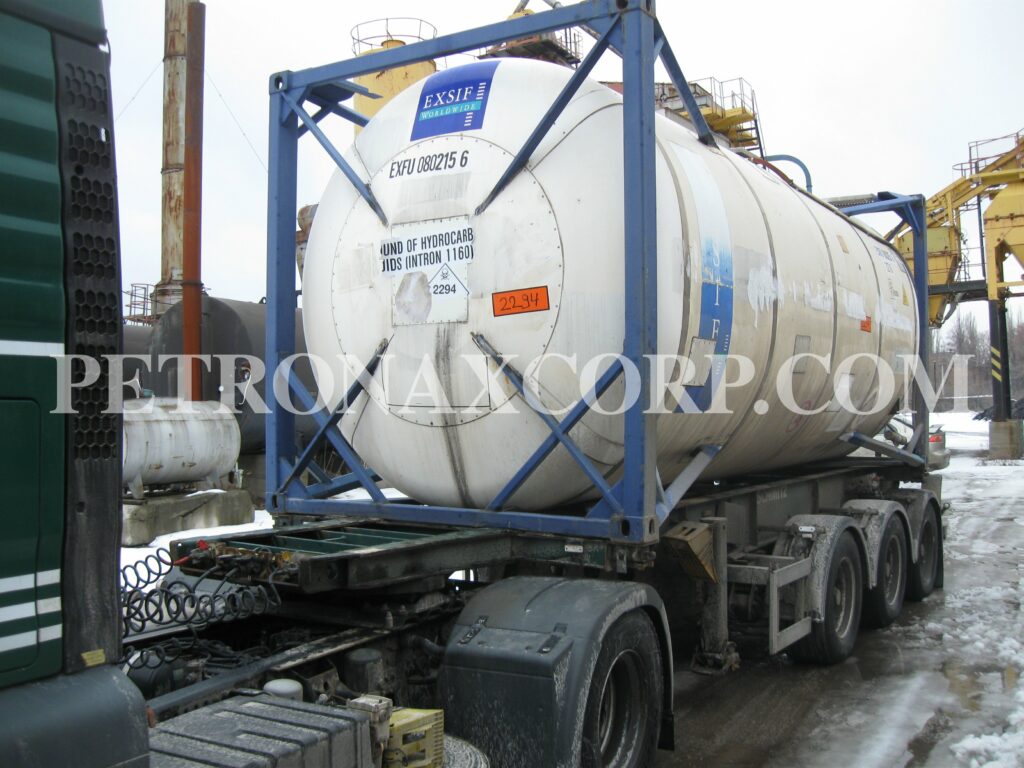
- Logistics: ISO tanks, drums and IBCs, delivered to Europe, the Americas, the Middle East and Africa.
- Consistent quality: batch-by-batch certificates of analysis and traceable sourcing.
Frequently Asked Questions about N-Methyl Aniline
What is the best octane booster for gasoline blending?
There is no universal answer. For many blenders, NMA offers the best cost per octane point and is metal-free. Its use, however, must comply with local fuel standards.
How much does N-Methyl aniline raise octane?
At about 1 % by volume, NMA typically raises RON by 2 to 3 points. The exact response depends on the composition of the base gasoline.
Is NMA the same as MMA?
Yes. N-Methyl aniline and monomethylaniline (MMA) are two names for the same molecule, CAS 100-61-8.
Is N-Methyl aniline allowed in Europe?
It is not part of the EN 228 gasoline specification. In the EU it is mainly used for export grades and non-road fuels.
Conclusion: N-Methyl Aniline as Your Octane Improver
N-Methyl aniline has established itself as a highly efficient, metal-free octane booster and octane improver for refiners and blenders worldwide. Used correctly, at validated treat rates and within the local regulations, it offers a flexible and economical route to on-spec gasoline.
Contact PETRONAX today to request a quotation, a technical data sheet or a sample of fuel-grade N-Methyl aniline.