A demulsifier for crude oil helps dispersed water droplets join and settle. The practical test is how well the water separates from a particular crude under the available process conditions.
What a demulsifier for crude oil does
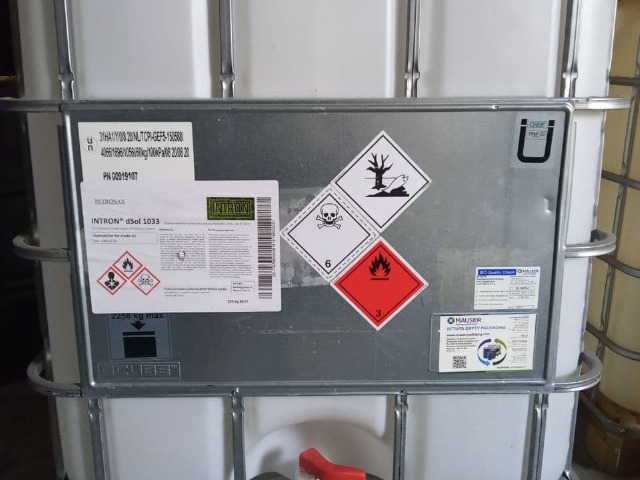
Demulsifiers are chemical compounds that are used to separate oil from water. They are commonly used in the oil and gas industry to separate the oil and water phases in crude oil emulsions. Crude oil emulsions are a mixture of oil, water, and other substances such as salts, solids, and gas. These emulsions are formed when oil and water are mixed together, and they can cause several issues such as increased viscosity, decreased flow rate, corrosion, and damage to equipment. To avoid these issues, demulsifiers are used to break the emulsion and separate the oil and water phases. In this article, we will discuss the properties of a demulsifier product called INTRON dSol.
Properties of INTRON dSol
INTRON dSol is a demulsifier product that is specifically designed to break crude oil emulsions. It is a non-ionic surfactant that has excellent wetting and spreading properties. The product is made from a blend of alkoxylated alcohols and alkoxylated phenols, which are known to have good solubility in crude oil. The product is also free of aromatic compounds and is therefore environmentally friendly.
INTRON dSol has several good properties that make it an effective demulsifier. First, it has a low interfacial tension, which means that it can easily penetrate the oil-water interface and destabilize the emulsion. Second, it has a high HLB (hydrophilic-lipophilic balance) value, which means that it has good affinity for both water and oil phases. This property allows the demulsifier to efficiently break the emulsion and separate the oil and water phases. Third, INTRON dSol is thermally stable and can withstand high temperatures without losing its effectiveness. This property makes it suitable for use in oil and gas production facilities where the temperature of the crude oil can be high.
In addition to its good demulsification properties, INTRON dSol has several other advantages. It is compatible with both sweet and sour crude oils, and it can be used in a wide range of salinities. The product is also easy to handle and can be applied in different ways, such as injection or mixing. Moreover, it has a low toxicity level and is safe to handle.
Where and how to apply INTRON dSol
INTRON dSol is commonly used in the oil and gas industry to break crude oil emulsions. It is particularly useful in offshore production facilities where space and weight constraints are important considerations. The product can be used in different stages of the production process, such as in the separators, desalters, and crude oil tanks. It is also suitable for use in pipelines and tanker trucks where crude oil is transported.
When evaluating a demulsifier for crude oil, use a sample from the stream you intend to treat. Light and heavy crudes can respond differently. For example, a treatment that releases water quickly in one blend may need more settling time in another.
The product can be applied in different ways depending on the specific application. For example, in a separator, the demulsifier can be injected into the oil-water stream, where it will mix with the emulsion and break it down. In a crude oil tank, the product can be mixed with the crude oil and left to settle, where the oil and water phases will separate naturally. In a pipeline or tanker truck, the product can be injected into the oil stream to prevent the formation of emulsions during transportation.
Conclusion
Choose the treatment using results from the actual emulsion. Compare the separated water, the oil phase and the time available in the separator before deciding on a field trial.
How to compare a demulsifier for crude oil
During a bottle test, record temperature, dose and settling time. Two samples that separate at different rates may look alike after a long wait. For a laboratory procedure to measure water and sediment in the crude, see ASTM D4007.