
From lab to tank.
In short, this is how our fuel additive testing works: we select, test and verify INTRON® additives for crude oil, gasoline and diesel using recognised EN, ISO, ASTM and CEC test methods.
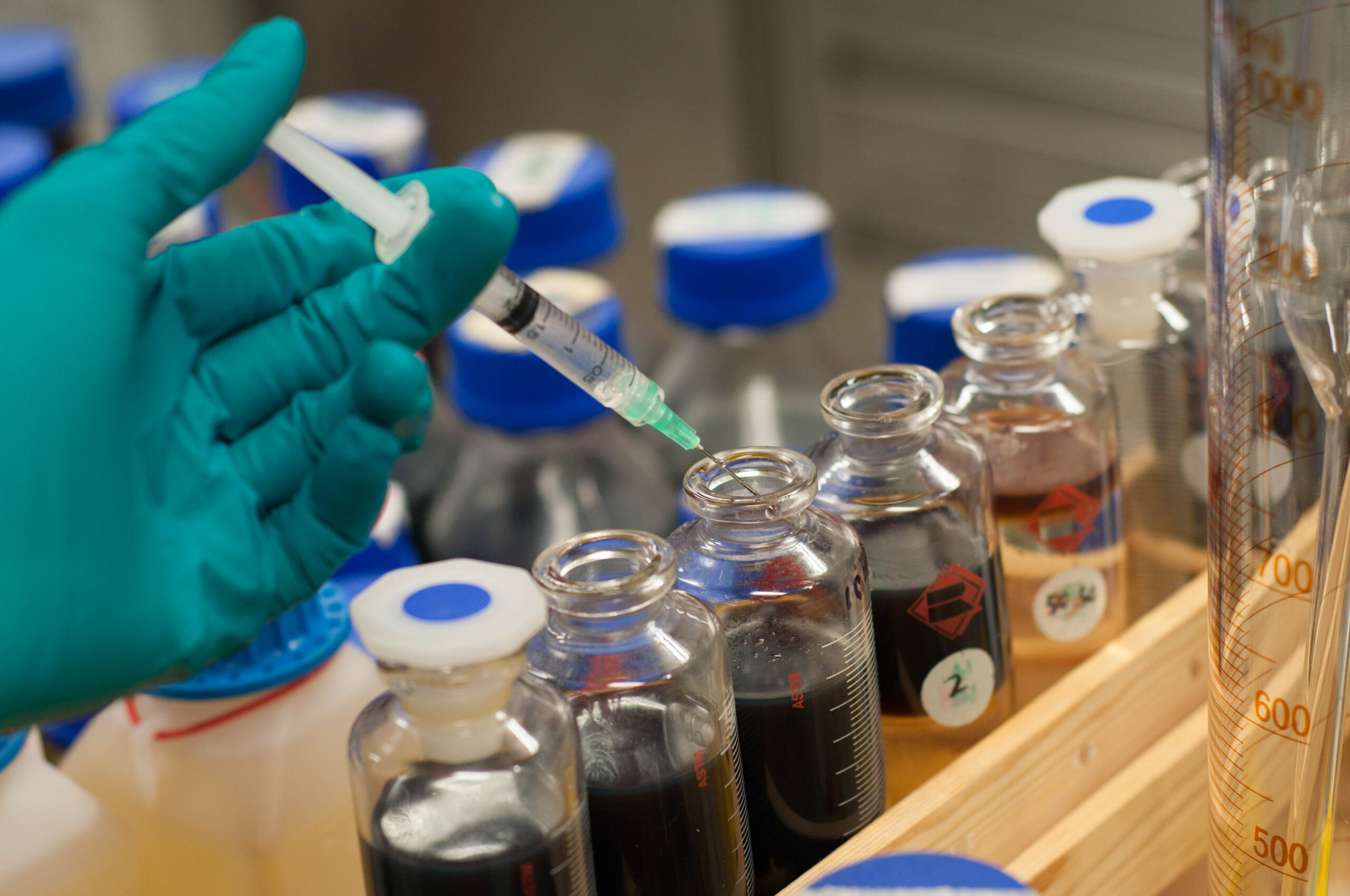
Our approach
In fact, Europe is home to some of the world’s leading laboratories for fuel and crude oil analysis. Therefore, we work with independent European laboratories on fuel additive testing under recognised standard methods.
As a result, the performance on our data sheets is measured, not assumed.
Fuel additive testing in five steps
- 01
Sample & analysis
First, we analyse your base fuel or crude oil and define the parameter to improve.
- 02
Product selection
Then we select the INTRON® product and the treat rate for your fuel and specification.
- 03
Laboratory testing
After that, the treated fuel is tested to EN ISO and ASTM methods against the untreated base fuel.
- 04
Engine testing
In addition, deposit-control additives are verified in standardised CEC engine tests.
- 05
Batch control & CoA
Finally, each delivered batch comes with a Certificate of Analysis. Moreover, TDS and SDS are available on request.
Fuel additive testing methods
We use standard test methods published by ASTM International, ISO and CEN, because results are then comparable between laboratories. Besides, further methods are available on request.
Crude oil — INTRON® upstream series
Water and sediment
Centrifuge method
Corrosivity of crude oil
Corrosion inhibitors
Hydrogen sulfide
In fuel oils
Paraffins, naphthenes, aromatics
In light distillates
Gasoline & diesel — laboratory
Octane number RON / MON
INTRON® octane booster series
Cetane number
INTRON® cetane improvers
Lubricity (HFRR)
INTRON® lubricity improvers
Copper strip corrosion
INTRON® corrosion inhibitors
Cold filter plugging point
INTRON® cold flow improvers
Engine tests — INTRON® multifunctional cleaning additives
Intake valve cleanliness
Gasoline
Injector nozzle coking
Diesel
Injector fouling
Diesel, common rail
Internal injector deposits
Diesel
Test INTRON® on your own fuel
For example, send us a sample of your base fuel or crude oil for fuel additive testing. We then select the product and treat rate and show you the effect in the laboratory — before you place an order.
- Certificate of Analysiswith every delivered batch
- TDS & SDStechnical and safety data sheets in several languages
- Test reportsavailable on request